

Not all probiotics are created equal: how to choose the ones that actually work
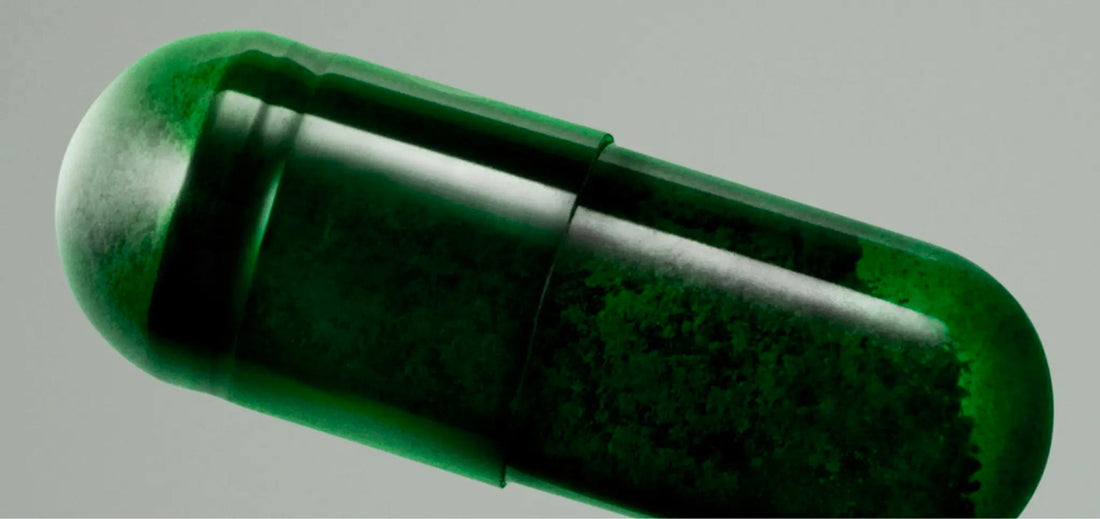
In recent years, probiotics have gone from niche to mainstream. We hear about gut microbiota, easy digestion, immune system, and metabolism. But with so much information, it's easy to get lost. This guide explains how to choose probiotics that actually work, what to look for on the label, and how to avoid empty marketing hype.
What is a probiotic?
A probiotic is a live microorganism (generally bacteria or yeasts) that, when consumed in adequate amounts, provide health benefits. The WHO/FAO definition highlights two key ideas: they must be live and they must be taken in an adequate amount to achieve an effect.
Are all probiotics the same?
No. Quality and effectiveness depend on the specific strain , the scientific evidence , its viability (that it reaches the intestine alive), and the dose (CFU) . That's why there are price differences: it's not the format that matters (capsule, powder, or liquid), but the science behind each strain.
How to choose probiotics that actually work
1) Specific and well-identified strain
It's not the same to read " Lactobacillus " as it is to read " Lactobacillus rhamnosus IMC 501®". Each strain has specific properties. Demand the name and code; that's your guarantee. We're talking about a probiotic that's been studied and has scientific evidence . A few well-studied strains are better than "mixtures" without scientific backing.
2) Scientific evidence in humans
Look for references to published clinical studies . Ask yourself: What specific benefits have been observed for this strain? Does the manufacturer cite studies on their website or packaging?
3) Viability up to the intestine
A probiotic only works if it reaches the site of action alive. It must survive passage through the stomach and bile and remain stable until the expiration date. At Andala, we use strains like Synbio® and IMC 510® , selected for their natural resistance to the gastrointestinal tract and formulated to maintain their efficacy for 18 to 24 months under normal storage conditions.
Beware of the myth: it's not just "liquid probiotics" that work. What matters is the strain and its viability, not the format.
4) Adequate dose (CFU)
The effectiveness of a probiotic depends on the dose, which is measured in CFU (Colony Forming Units). Many effects observed in studies are achieved with billions of CFU per day. An insufficient dose may not produce noticeable changes.
Common myths about probiotics
| Myth | Reality |
|---|---|
| “Powdered probiotics are dead” | Viability depends on the strain and formulation, not the format. |
| “Only liquid probiotics work” | There are strains with proven effectiveness in powder and capsule form , as well as in fermented foods. |
| “They absolutely need to be encapsulated.” | Some strains are naturally resistant to the digestive system; extra technology is not always necessary. |
Practical examples: what to look for in real products
For bloating and digestive comfort: products with strains such as L. rhamnosus IMC 501® and L. paracasei IMC 502®. In Andala, DeBloat combines both (Synbio®).
To manage cravings and glucose spikes: combine specific probiotics (e.g., IMC 510®) with supportive ingredients like Reducose®. At Andala, GlucoGuard is formulated with this approach.
Conclusion: Choose science, not marketing
How to choose probiotics in 3 steps: identify the strain, verify the evidence, and confirm viability and dosage. This way you'll know you're buying effective probiotics that truly make a difference.


